Control Theory for Neural Systems
Aerospace controls PhD turned computational neuroscientist · seeking research scientist roles
I’m currently open to research scientist positions in computational neuroscience, neural engineering, and control of complex dynamical systems. Reach out at adityad@uw.edu or on LinkedIn.
Hi, I’m Aditya. I’m a control theorist working on closed-loop control of neural systems. I design real-time feedback controllers and estimators that read population neural activity and steer it toward physiologically meaningful targets — across optogenetic and electrical stimulation, and across recording modalities from widefield imaging to µECoG.
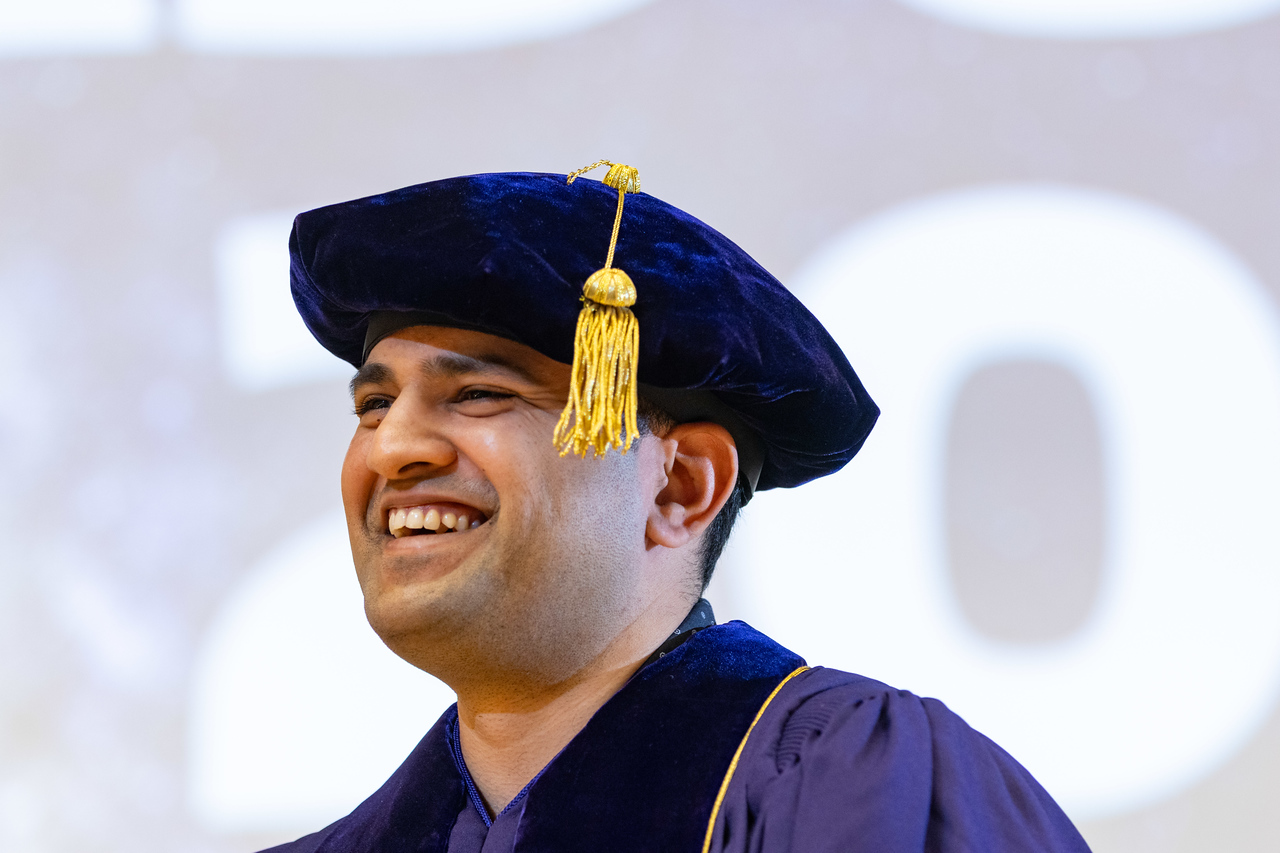
I received my PhD in Control Theory from the Dept. of Aeronautics & Astronautics at the University of Washington in June 2025, advised by Prof. Mesbahi, where I worked on robust control and estimation for spacecraft guided by machine-learned perception. The questions turn out to transfer directly: controllability, observability, and robust synthesis under uncertainty are the same tools whether the plant is a spacecraft with an unreliable sensor or a cortical population you can only partially observe and only partially drive. I now bring that foundation to the design of neural interfaces and stimulation therapies, as a postdoctoral researcher at UW’s Steinmetz Lab and NERD Lab.
My research interests include:
- Closed-loop control of neural population dynamics
- System identification for high-dimensional, partially-observed biological systems
- Controllability and reachability analysis for neural stimulation
- Estimation-aware planning and robust control under set-valued uncertainty
Selected Work
Closed-loop control of neural systems
Current work — Steinmetz Lab and NERD Lab, UW.
I build real-time feedback controllers that read population neural activity and steer it toward a target. The loop uses widefield calcium imaging as an online state readout and drives a steerable stimulation laser as a function of the animal’s brain state, with quantified end-to-end latency.
The control-theoretic core is system identification: fitting low-order dynamical models to stimulation-evoked cortical responses, so a controller can be designed rather than hand-tuned. On the µECoG side, I use reachability and controllability analysis to determine which cortical nodes a given stimulation site can actually drive — the same questions that govern where to sense and steer in a trajectory problem, asked of a brain instead of a spacecraft.
Estimation-aware planning under set-valued uncertainty
PhD work — RAIN Lab, UW Aeronautics & Astronautics.
Paper (JGCD 2025) · Code and videos
This is where the observability machinery I now apply to neural systems came from. A neural network deployed in a physical environment often behaves like a state-dependent sensor — a keypoint network’s uncertainty, for instance, depends on the illumination it happens to be in. If uncertainty depends on state, the trajectory itself becomes a design variable for estimation quality: you can plan a path that makes the system easier to estimate while still completing the task.
I model the ML uncertainty as bounded sets, define an observability condition on the resulting output tubes, and solve the optimal control problem with sequential convex programming.
With a network of agents the setup improves further, by quantifying the directions in which information is missing and solving the problem sequentially across agents.
Experimental systems and hardware
Alongside the theory, I build the systems the theory runs on: real-time, multi-threaded image- and signal-processing pipelines in Python for online neural feedback, and before that a simulation and robotics stack for testing controllers against real sensor behaviour.
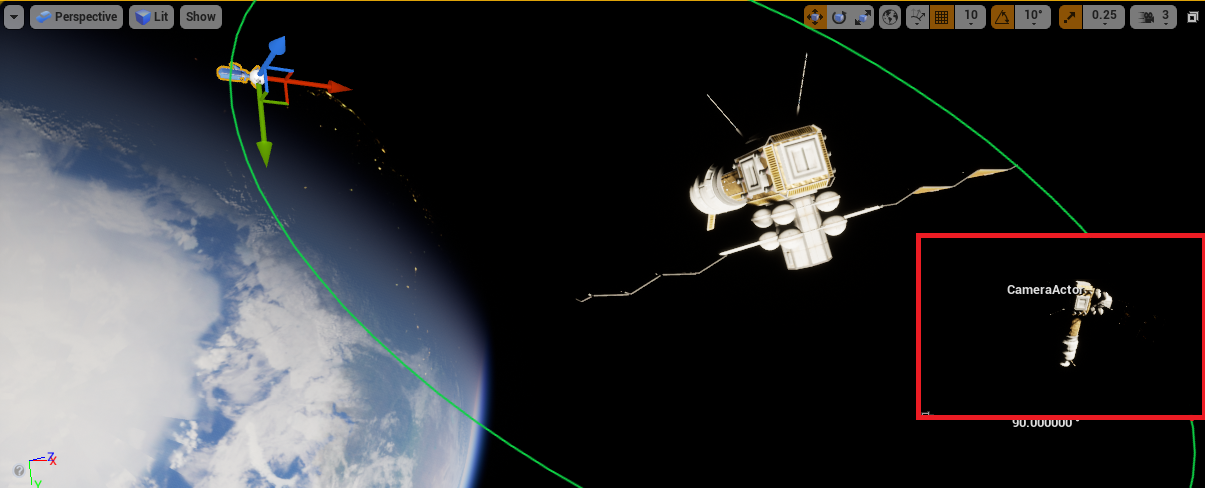
I also built and supervised educational hardware testbeds for aerial and ground robots at the RAIN Lab, including a ROS2 ground-robot platform for testing trajectory optimization and an in-house indoor positioning system.
Selected Publications
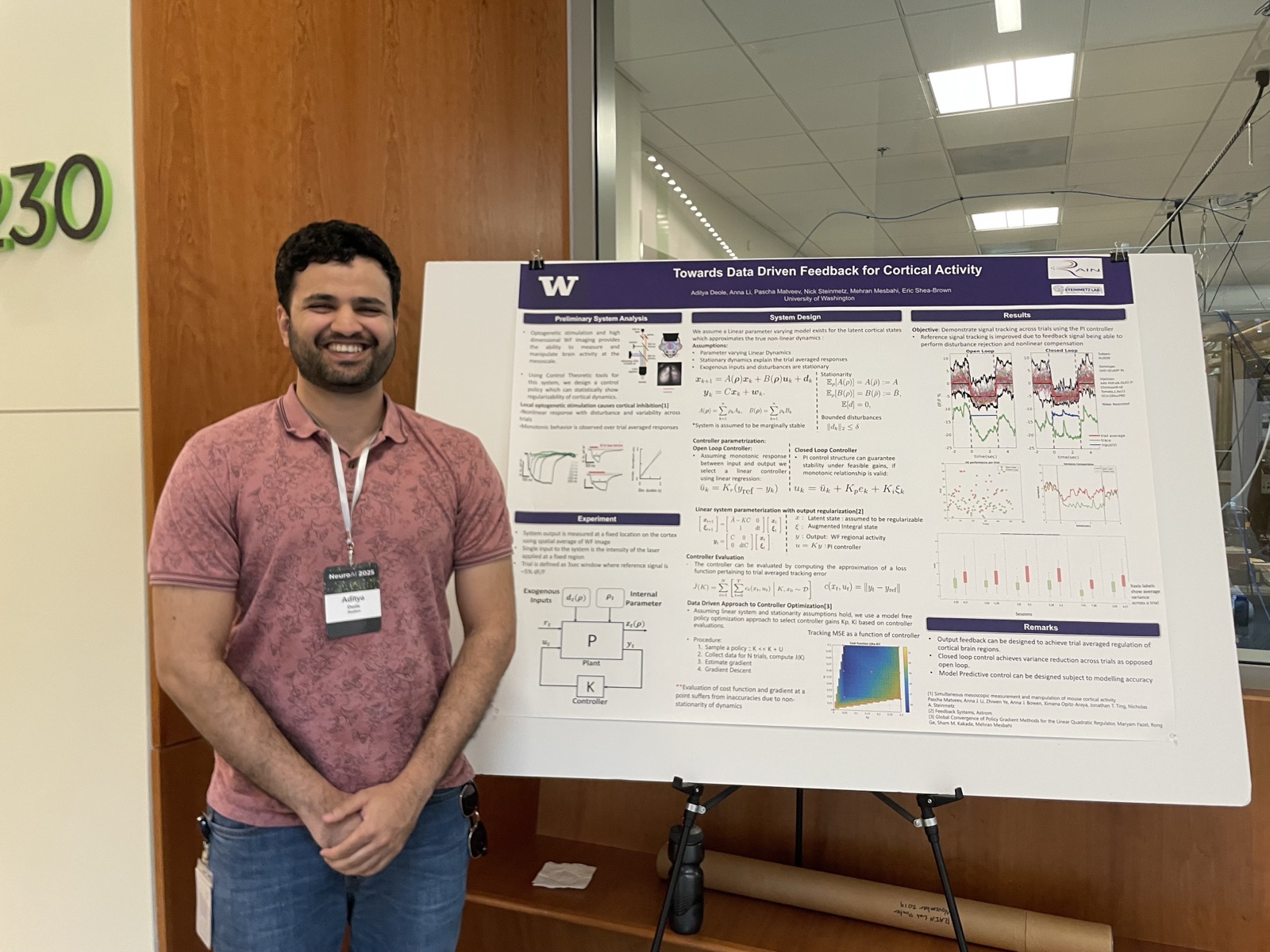
- A. Deole, N. Steinmetz, et al. “Towards Data-driven Feedback for Cortical Activity.” NeuroAI, 2025.
- Z. Lu, A. Deole, et al. “Benchmarking Probabilistic Time Series Forecasting Models on Neural Activity.” NeurIPS 2025 Workshop.
- A. Deole, M. Mesbahi. “Estimation-Aware Trajectory Optimization with Set-Valued Measurement Uncertainties.” Journal of Guidance, Control, and Dynamics, 2025.
News
Poster presentation at NeuroAI 2025
Defended my PhD thesis — June 2025

UW Graduate Showcase 2025